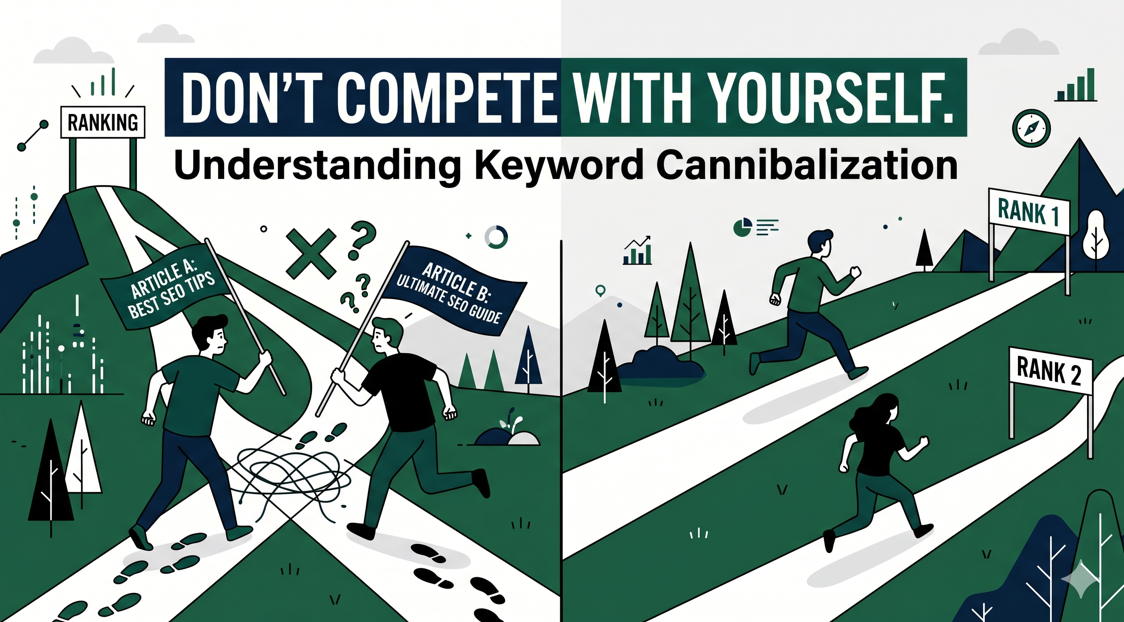
You’ve been doing everything right.Publishing blogs. Optimising every page. Building content consistently. And yet, your rankings keep flip-flopping. You hit page one for a week. Then you’re back to page three. Then page one again. Then gone.
No penalty. No algorithm update you can point to. Just… instability.
Here’s a possibility nobody told you about. Your pages might be fighting each other.
That’s keyword cannibalization. And it’s one of the most common, most costly, and most overlooked SEO problems on the internet today.
Table of Contents
Let’s Start With a Story
Imagine you open a restaurant. Word spreads. You’re known for your dahi puri.
So you open a second branch, two streets away, also famous for dahi puri. Same price. Same recipe.
Now customers are confused. Your regulars split between the two. You’re doing the same volume of business — but with twice the costs, twice the staff, and half the energy at each location. Neither branch gets to be “the one.”
That’s exactly what happens when two pages on your website target the same keyword.
They split everything. Rankings. Authority. Traffic. Clicks. And neither one wins the way a single, undisputed page would have.
So. What Exactly Is Keyword Cannibalization?
Keyword cannibalization happens when two or more pages on the same website target the same keyword (or very similar keywords) with the same search intent.
The result: your pages compete against each other in Google’s search results instead of working together to dominate them.
It sounds counterintuitive. Surely more pages about a topic means more chances to rank?
Not how it works.
Google can only show so many results from any single domain. When it sees multiple pages from your site targeting the same query, it doesn’t rank all of them well. It gets confused about which one is the definitive answer. So it either rotates between them unpredictably, or suppresses all of them below where they should be.
You end up with two mediocre pages where you could’ve had one powerful one.
The Difference Between Keyword Cannibalization, Content Overlap, and Duplicate Content
These three often get confused. They’re not the same thing.
Duplicate content is when two pages are nearly identical — same words, same structure. Google picks one to index and largely ignores the other. Technically a crawl and indexing problem.
Content overlap is when multiple pages cover similar topics, sometimes across different sites. There’s thematic similarity, but the intent and audience might differ slightly.
Keyword cannibalization is the most specifically damaging. It happens within your own site, when multiple pages are independently optimised to rank for the same keyword and serve the same user intent. The key word there is intent. If both pages are trying to answer the same question for the same kind of reader, they’re cannibalising.
The distinction matters because the fix for each is different.
How Does It Happen? (Usually By Accident)
Very few website owners set out to cannibalise their own content. It happens organically as a site grows. Here’s how.
The growing blog problem. You start a blog. Month 1, you write “What is SEO?” Month 6, you write “SEO Basics for Small Businesses.” Month 14, you write “A Beginner’s Guide to SEO in 2026.” Three articles. Same target keyword. Same reader. None of them rank as well as one comprehensive, well-built page would.
The product page problem. E-commerce sites often have multiple product variations that are nearly identical — same item, different size or colour — and use templates that target the same keyword on every variant. Google gets nothing but noise.
The local landing page problem. A business creates separate location pages for every area they serve, each one using the same keyword and near-identical content. The intent of each page is identical. Google can’t distinguish them.
The over-optimisation problem. You write one good blog post. Then, thinking more is better, you create another page with a slightly different title that covers the same territory. Both pages fragment the authority that should belong to just one.
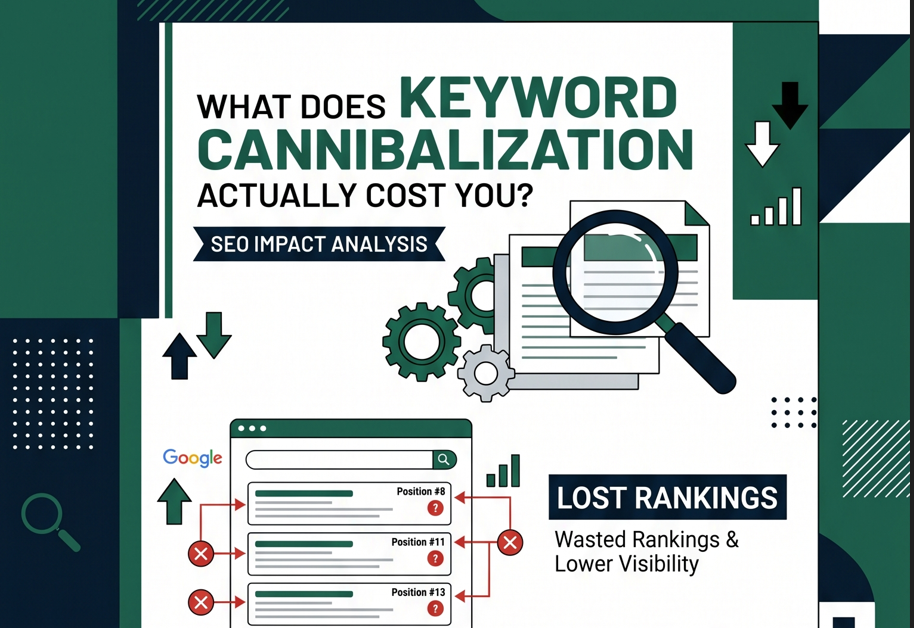
What Does Keyword Cannibalization Actually Cost You?
Let’s be specific about the damage.
Split ranking power. When two pages compete for the same keyword, they each get a fraction of the authority, backlinks, and engagement signals that one page would have received in full. A page with 100 authority points ranks far better than two pages with 50 each.
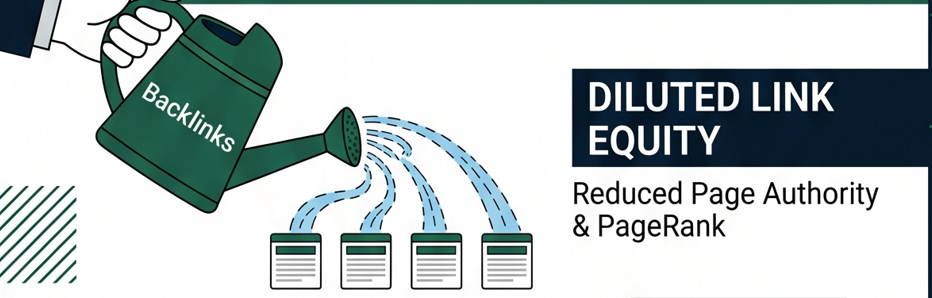
Diluted backlinks. Other websites that want to link to your content about that topic don’t know which page to cite. Some link to page A. Some link to page B. Neither accumulates the link equity needed to truly compete.
Confused crawlers. Google’s algorithms now understand topical relationships quite well. But when multiple pages signal the same intent, even smart crawlers start to hedge. They don’t know which page is your definitive resource, so they rank neither with confidence.
Unstable rankings. You’ll notice this as rank volatility — the tell-tale sign of cannibalization. Your position jumps between two URLs depending on Google’s latest crawl. One week it picks page A. Next week, page B. Neither holds.
Wrong page ranking. This is often the most frustrating outcome. Your well-written blog post starts outranking your service page for a commercial keyword. Now potential clients are landing on educational content instead of the page designed to convert them.
The 2026 Dimension: Cannibalization Is Now an AI Problem Too
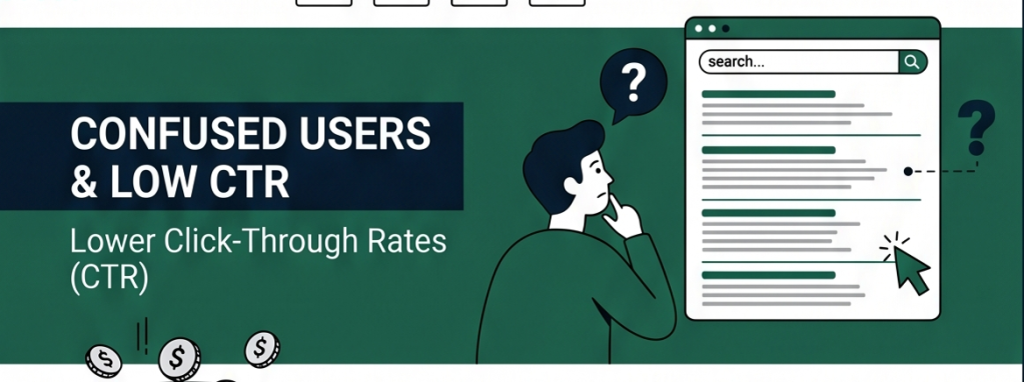
Here’s where this conversation gets urgent in a way that didn’t exist even two years ago.
We are in the middle of a structural shift in how people find information online.
Google AI Overviews now appear in roughly 25 to 48% of US search queries depending on category. ChatGPT processes over 2 billion queries daily. Platforms like Perplexity and Google Gemini are where a growing portion of your potential clients begin their research. These aren’t fringe behaviours anymore — they’re mainstream.
And for keyword cannibalization, this creates a whole new layer of damage.
When AI systems like ChatGPT, Perplexity, or Google AI Overviews are deciding which source to cite in a generated answer, they’re looking for one thing above everything else: clear topical authority. They want the one definitive page on a subject. The page that is the unambiguous, comprehensive, trustworthy answer.
When you have multiple competing pages on the same topic, AI systems face the same confusion Google does — but they respond differently. Instead of rotating between your pages, they often skip you entirely and cite a competitor whose content structure is cleaner.
One clear page = high chance of citation. Multiple overlapping pages = you disappear from AI responses.
In 2026, this matters because that AI citation might be the only impression a user ever sees. Many searches are now answered entirely within the AI interface. Nobody clicks through. If you’re not the cited source, you don’t exist for that query.
How to Find Keyword Cannibalization on Your Site
You don’t need expensive tools to start. Here’s a practical process.
Step 1: The Google site search method.
Go to Google and type: site:yourwebsite.com "your keyword"
This surfaces all pages on your site that Google associates with that keyword. If you see two or more URLs appearing for the same keyword, you have potential cannibalization. Start a list.
Step 2: Google Search Console.
This is your clearest signal. Go to Performance, click on a keyword you care about, then switch to the Pages tab. If multiple URLs are generating impressions for the same query, and especially if they’re trading positions over time, that’s active cannibalization.
Look specifically for: queries where impressions are split across two or more pages, and queries where average position fluctuates significantly week over week.
Step 3: Ahrefs or Semrush (if you have access).
Both tools now have dedicated cannibalization reports. In Ahrefs, use Site Explorer and filter for keywords where multiple URLs rank. In Semrush, Position Tracking can show you URLs that are taking turns ranking for the same terms.
Step 4: Manual content audit.
List every piece of content you’ve published. Group them by broad topic. Ask honestly: do any of these serve the exact same reader with the exact same intent? If yes, you’ve found a cannibalisation problem.
How to Fix It
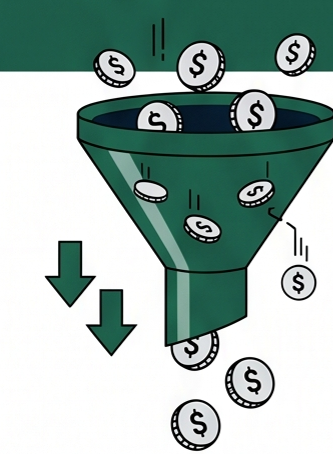
Once you’ve identified the problem, you have four main fixes depending on the situation.
Fix 1: Merge and redirect (the most powerful fix).
If two pages cover essentially the same ground, combine them into one definitive, comprehensive page. Redirect the weaker URL permanently (301 redirect) to the stronger one. This consolidates all backlinks, authority, and engagement signals into a single page. The merged page becomes more powerful than either individual page was.
This is the right move when the content is genuinely too similar to serve distinct purposes.
Fix 2: Reoptimise for different intent.
Sometimes two pages on similar topics can be differentiated by their intent. A beginner-facing overview and an advanced implementation guide can both exist — as long as you make the intent difference explicit. Rewrite headlines, reframe the angle, and target genuinely different keywords that reflect different stages of the reader’s journey.
This works when there’s a real content difference that just hasn’t been expressed clearly enough.
Fix 3: Canonical tags.
If you have duplicate or near-duplicate pages that serve technical or structural purposes (product variants, filtered pages, pagination), use the canonical tag to tell Google which version is the primary one to index and rank. This doesn’t consolidate content — it signals authority to search engines.
Fix 4: Delete the weaker page.
If a page has no traffic, no backlinks, no useful content, and no purpose beyond fragmenting your authority — delete it. Make sure you 301 redirect the URL to the relevant primary page so no link equity is lost.
How to Prevent It Going Forward
Fixing existing cannibalization is good. Not creating new cannibalization is better.
Build a keyword map. Before publishing any new content, document it. A simple spreadsheet works: URL, target keyword, search intent, content type. Before writing anything new, check this map. If something similar already exists, update the existing page instead of creating a new one.
Cluster before you create. Group keywords by intent, not just topic similarity. “What is content marketing” and “content marketing definition” serve the same intent. They belong in one page. “Content marketing strategy for startups” serves a different intent. That can stand alone.
Use internal links strategically. Identify your primary page for each topic cluster. Make sure all related content links back to that primary page with consistent anchor text. This tells both users and search engines which page is the authoritative one.
Conduct quarterly content audits. This doesn’t have to be complicated. Once every three months, review what you’ve published. Look for overlap. Ask whether older posts are competing with newer ones. Clean up before the problem compounds.
Brief writers clearly. If you work with a team or freelancers, brief them with the keyword map. Every brief should include a check — does this topic already exist on the site?
When Multiple Pages Ranking Is Actually Fine
Not every instance of two pages appearing for the same keyword is a problem. Context matters.
Different intents can coexist. A product page and a blog post can both rank for “best running shoes” without cannibalising each other — because one is informational (helping someone research) and one is transactional (helping someone buy). The search intent is different even if the keyword phrase is similar.
Geographic targeting is valid. A business with genuinely distinct pages for Mumbai, Delhi, and Bengaluru, each with unique, locally relevant content, is not cannibalising. The intent is geographically distinct.
Strategic feature targeting. Sometimes you intentionally want one page to capture a featured snippet and another to hold the standard organic position. That’s deliberate planning, not cannibalization.
The test is always intent. Are both pages genuinely trying to serve a different reader with a different need? If yes, fine. If no — you have a problem to fix.
A Real-World Example
A digital marketing agency publishes three articles over two years.
January 2025: “What Is Content Marketing? A Beginner’s Guide”
June 2025: “Content Marketing Explained: Everything You Need to Know”
February 2026: “The Ultimate Guide to Content Marketing in 2026”
All three target the keyword “content marketing.” All three serve the same reader: someone who wants an introduction to the topic.
In Google Search Console, none of them rank consistently on page one. They rotate between positions 12 and 30. Combined traffic across all three articles is less than what one well-built, authoritative page would generate.
The fix: pick the strongest page, merge the best content from all three into it, redirect the other two, and watch a single page climb to page one — with three times the authority.
The Big Picture
Keyword cannibalization is a symptom of growth without strategy.
It happens to every site eventually. It doesn’t mean you’ve done something wrong. It just means your content has outgrown its structure, and it needs to be organised.
In 2026, the cost of ignoring it is higher than ever. Every cannibalised keyword is a missed ranking. Every missed ranking is a missed AI citation. Every missed AI citation is a potential client who found your competitor instead of you.
The websites winning right now — in Google, in AI Overviews, in ChatGPT answers — are the ones that have done the structural work. One clear page per intent. Clean internal linking. No competing pages pulling in opposite directions.
That’s not complicated. It’s disciplined.
And discipline in content strategy is what separates a site that grows consistently from one that keeps rebuilding the same ground.
Action Steps: Do This This Week
- Open Google Search Console. Check your top 10 keywords. See if more than one URL is generating impressions per keyword.
- Pick your top cannibalised keyword. Find both pages. Decide which is stronger.
- Merge the weaker into the stronger. Redirect. Update internal links.
- Create a keyword map spreadsheet if you don’t already have one. Add every existing page.
- Make it a rule: before writing any new content, check the map.
That’s it. No expensive tools required to start. Just clarity on what you already have.
FAQs
Q1: What is keyword cannibalization in SEO?
Keyword cannibalization happens when two or more pages on the same website target the same keyword with the same search intent. Instead of one strong page ranking well, the pages compete against each other, splitting authority, diluting backlinks, and confusing search engines about which page to rank.
Q2: How do I know if my website has keyword cannibalization?
The clearest way is Google Search Console. Go to Performance, click a keyword, then switch to the Pages tab. If more than one URL is generating impressions for the same query, you have cannibalization. You can also use the Google site search method: type site:yourwebsite.com "your keyword" and see how many of your pages appear.
Q3: Does keyword cannibalization hurt rankings?
Yes. It causes rank volatility, dilutes link equity across multiple weaker pages, and can result in the wrong page ranking — for example, a blog post outranking a service page for a commercial keyword. One authoritative page consistently outperforms two competing ones.
Q4: What is the best way to fix keyword cannibalization?
The most effective fix is to merge the competing pages into one comprehensive page and 301 redirect the weaker URL to the stronger one. This consolidates all backlinks, authority, and engagement signals. If the pages serve genuinely different intents, reoptimise each one around a distinct keyword instead.
Q5: Is keyword cannibalization the same as duplicate content?
No. Duplicate content is when two pages are nearly identical in text. Keyword cannibalization is specifically about intent — multiple pages independently optimised to rank for the same keyword and answer the same question. A page can be unique in wording and still cannibalise another page if both serve the same search intent.
Q6: Can keyword cannibalization affect AI Overviews and AI search results?
Yes, and this is increasingly important in 2026. AI platforms like Google AI Overviews, ChatGPT, and Perplexity look for clear topical authority when deciding which source to cite. Multiple competing pages on the same topic fragment that authority signal, making it less likely any of your pages gets cited in an AI-generated answer.
Q7: How do I prevent keyword cannibalization in the future?
Build a keyword map: a spreadsheet that assigns one primary keyword and search intent to each URL on your site. Before publishing any new content, check whether that topic and intent already exists. Use internal links to point related content toward the primary page for each topic cluster.
Q8: How is keyword cannibalization different from keyword stuffing?
Keyword stuffing is cramming too many keywords into a single page. Keyword cannibalization is spreading the same keyword across too many pages. Stuffing makes one page look spammy to Google. Cannibalization makes multiple pages compete against each other so none of them ranks as well as it could.

Odell Dias is the founder of RightlyDigital.com where Online Marketing concepts are made easy. He has over 10 years of experience in the Digital Marketing industry, helping brands and individuals alike to achieve their marketing goals. He is known as one of the best digital marketing freelancers for small-to-medium-sized businesses.